

In this case of M&A transaction structuring, the Purchaser acquires a controlling stake in the target Company.
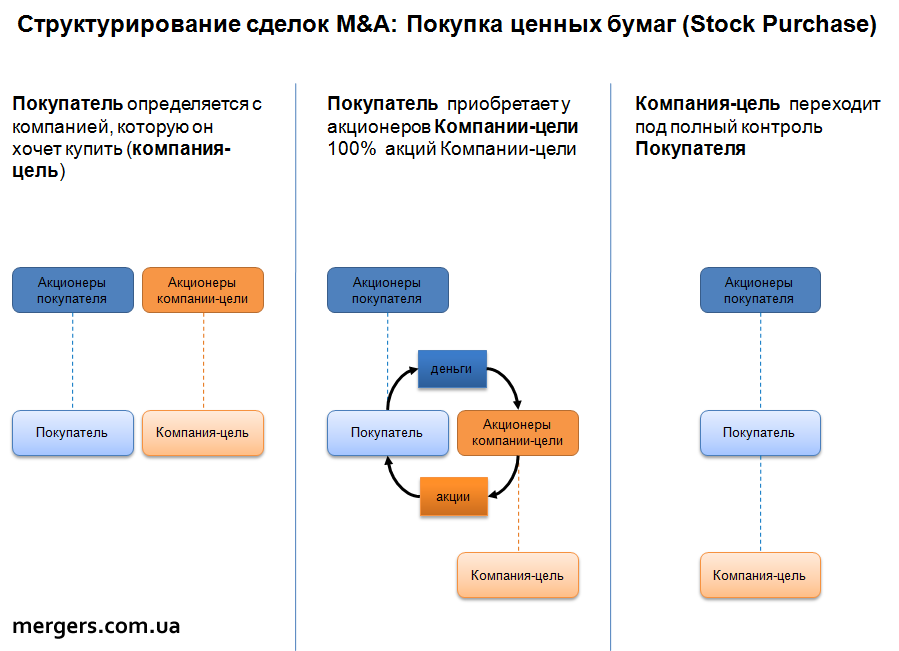
In this scheme of M&A transaction, the Purchaser determines the target Company, negotiates on the price of the purchase and acquires all assets and liabilities of the target Company, which from a legal point of view continues to operate as before, but as a subsidiary (controlled) company.
The advantages of the Stock Purchase scheme
The shareholders of the target Company receive real money for their share, which is always preferable to other forms of payment
The absorbed company maintains its corporate structure and operational activity
The contracts, labor agreements and other legal documents signed prior to acquisition are in full legal force
Licenses and permits owned by the company bought are, as a rule, retained by the Purchaser
The Purchaser reserves the right for tax assets (for example, the transfer of losses from previous years)
Allows you to avoid a number of problems with the tax laws, which can occur at the sale/purchase of real assets
Drawbacks of the Stock Purchase scheme
The Purchaser must collect the amount needed to buy the company
Lack of mutual interest between the buyer and the seller, as the shareholders of the target Company will get no financial benefit from the future success of the merged company
The appearance of the commitments prior unknown and not disclosed, which pass to the Purchaser
The possible existence of unfavorable agreements with trade unions and employees which the Purchaser will have to execute
Possible problems with the shareholders who refuse to sell their stake for the proposed price


